
Posts and pads
A post is a short vertical support that stands on a concrete pad or block and carries a girder. Posts can lean, sink with their pads, split or rot, and a post that has stopped carrying its share leaves the floor above it with a dip.
Typical cost in Renton
Renton Foundation Repair works on the supports under the floor: posts, pads, girders and the sill plate in a crawlspace. If the floor above sags or bounces, or the wood below looks dark and soft, this is the page that explains what is being looked at.
Jobs start in Renton, with Kent and Tukwila close by. Renton’s houses from 1960 to 1979 make up about a quarter of its housing and those from before 1950 about 7 percent.
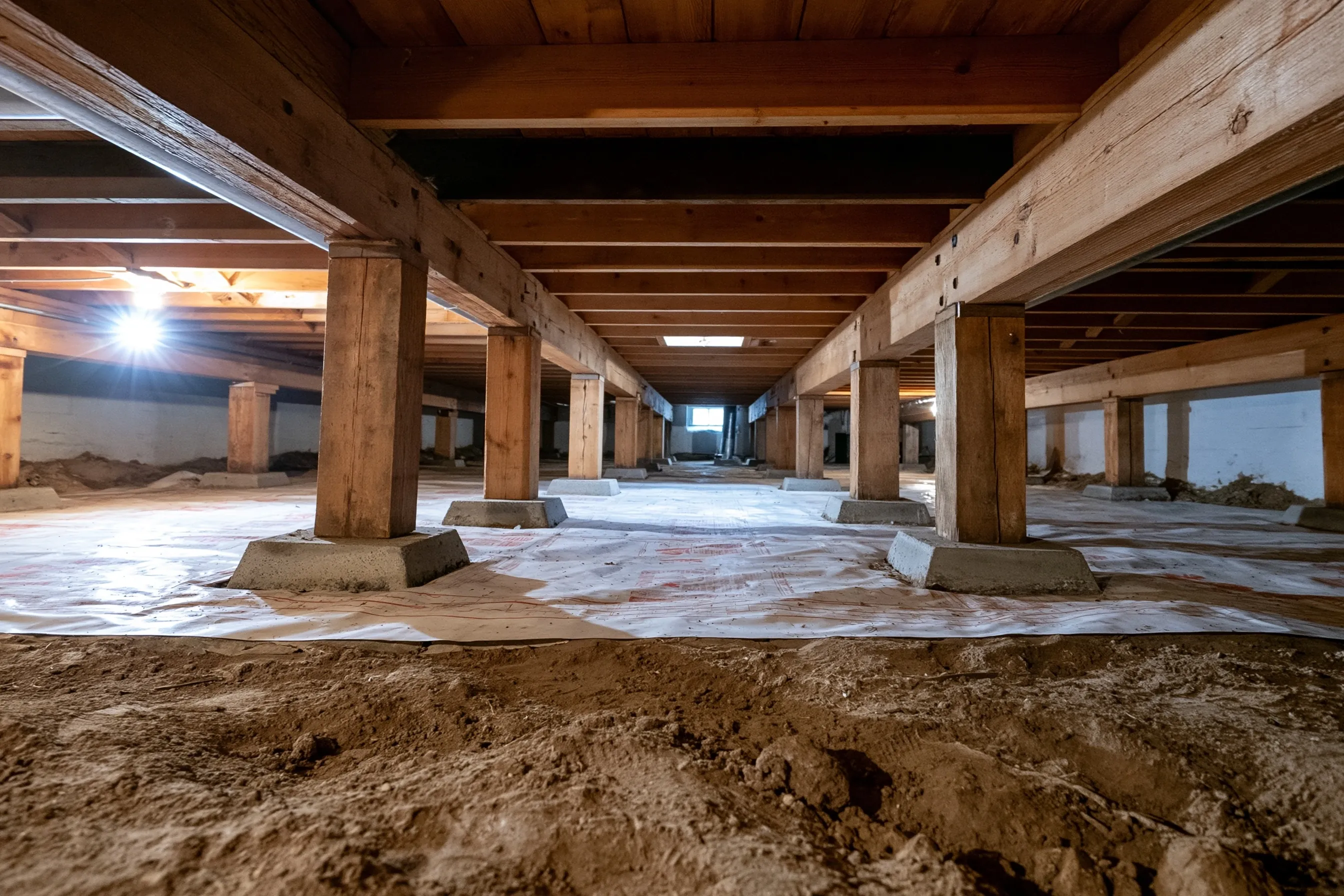
A post is a short vertical support that stands on a concrete pad or block and carries a girder. Posts can lean, sink with their pads, split or rot, and a post that has stopped carrying its share leaves the floor above it with a dip.
Girders run across the posts and the floor joists rest on them. A floor can bounce because joists are undersized or cracked, or because a girder has deflected, and the repair differs for each.
The sill plate rests directly on the stem wall and carries the framed walls above, so it is the first timber to meet damp rising or seeping through the concrete.
A slope can be felt barefoot and seen with a marble. A bounce is a different complaint, felt under footfall. From the crawlspace, look for posts that are tilted or off their pads, gaps between a post and the girder above, cracked or sagging beams and joists that have been notched or cut for pipes.
We do not state a cause from the floor alone. Settlement of the foundation, loose or missing supports, damp wood and old framing can each produce a floor that is not flat, and the answer comes from looking under the house.
Decay fungi take hold in wood that stays damp, according to a U.S. Forest Service manual, and they weaken the timber as they feed. Soft or dark wood under a house therefore points to two jobs: replacing what has gone weak, and finding where the damp comes from.
Federal Building America research recommends heavy polyethylene laid over the soil, lapped and sealed to walls and piers, for vented and unvented crawlspaces alike. Where a crawlspace is vented, it ranks bulk water, meaning poor grading, missing perimeter drainage or weak gutters, as the main moisture source. Ground cover is therefore moisture control and does not replace drainage.
Crawlspace work is slow because of access. Crews may carry materials through a small opening and work on their backs, and new posts have to go in on sound pads before old ones come out. Support is shifted in small steps with jacks, and we promise no particular result for the shape of the floor.
If the house has also settled, new posts only treat part of the problem. See foundation settlement and piering.
A damp crawlspace may trace to bulk water outside the house, which is why drainage comes first. Renton’s critical areas code groups steep slopes, landslide, erosion and seismic hazards, and coal mine hazards, as geologically hazardous areas, so a trench for drainage on such a lot is a question for the permit center.
Ask the Renton permit center whether replacing posts needs a permit at your address.
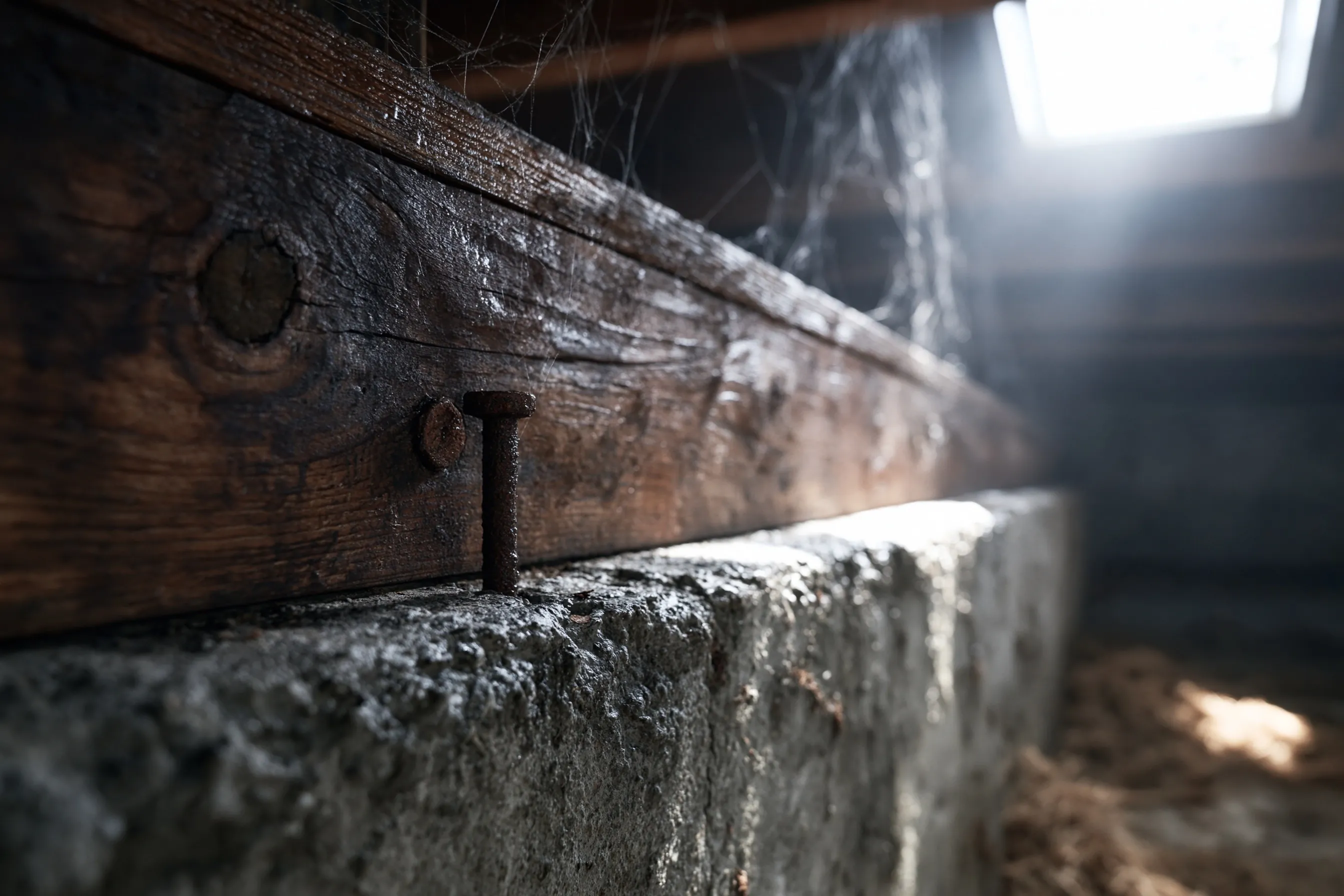
The joists, the girder under them or the posts may be the cause. It takes a look under the house to say which.
We can look at it. The plan depends on how far the damage runs.
A dry crawlspace starts with drainage. Ground cover helps after that.
Two neighbors of this work: seismic retrofit and foundation bolting, if the frame may not be fastened to the stem wall, and foundation drainage, if the soil under the house stays wet. Back to the Renton Foundation Repair home page.
Say what the floor does and where, whether the crawlspace is damp and about when the house was built. We'll get back to you soon with an estimate or any questions we have. Estimates are free and there's no obligation.
Call (425) 276-6261