Foundation Repair in Renton

Before any fix is priced, Renton Foundation Repair works out what a Renton foundation is doing: a corner that has dropped, a crack that is widening, a bouncy floor over the crawlspace, a wall that will not dry. The repair follows the cause, and some causes call for an engineer first.

Renton treats geologic hazards, coal mine hazards among them, as part of the rules for building, and that shapes how foundation work is planned on some lots. We work for homeowners in Renton, and in Kent and Tukwila next door.

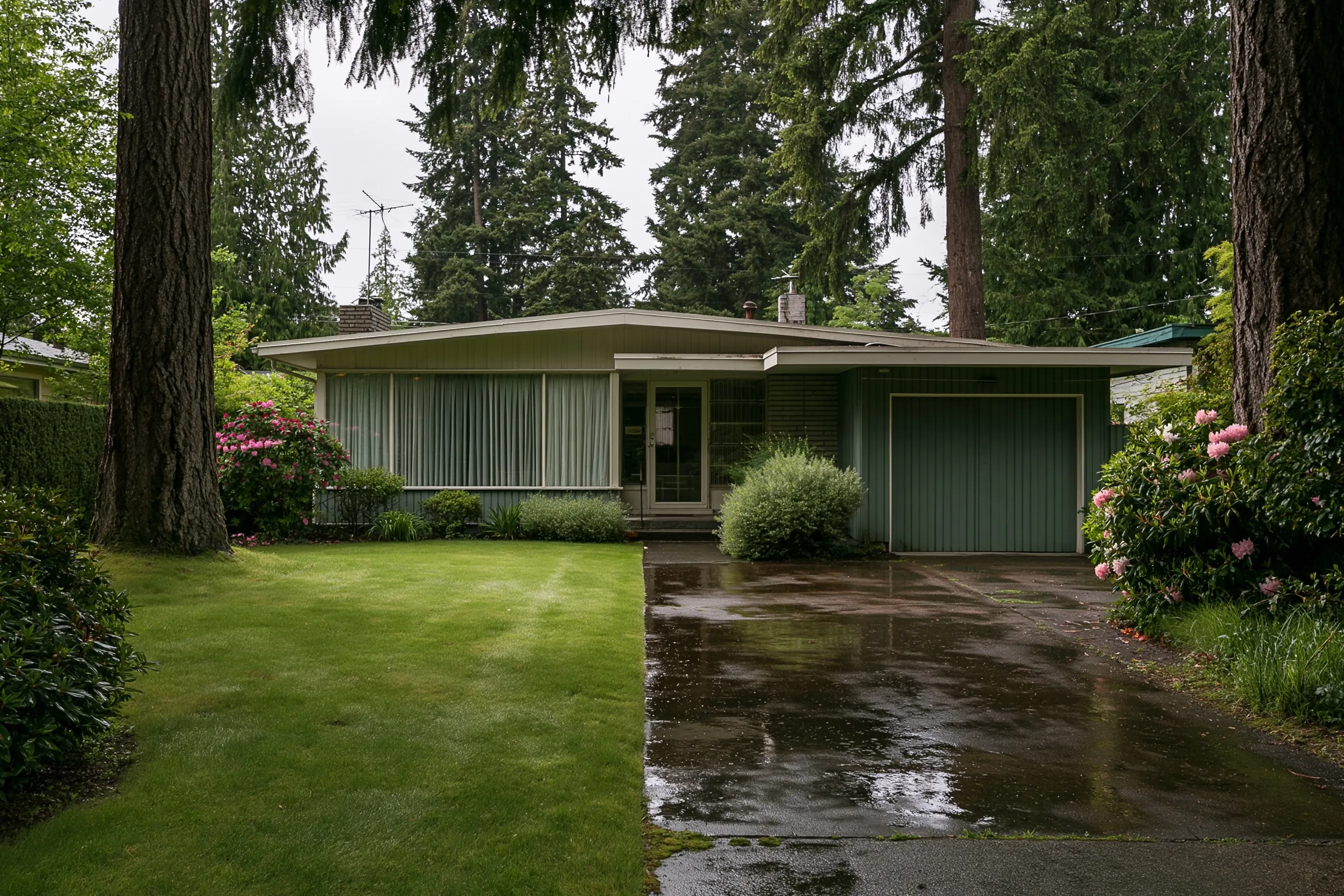
Front of a single-story rambler with a low-pitched roof and attached garage, wet green lawn, mature Douglas firs and rhododendrons and a damp driveway after rain
Foundation settlement and pieringFoundation drainageFoundation crack repairCrawlspace post and beam repairSeismic retrofit and foundation bolting

Our foundation repair services

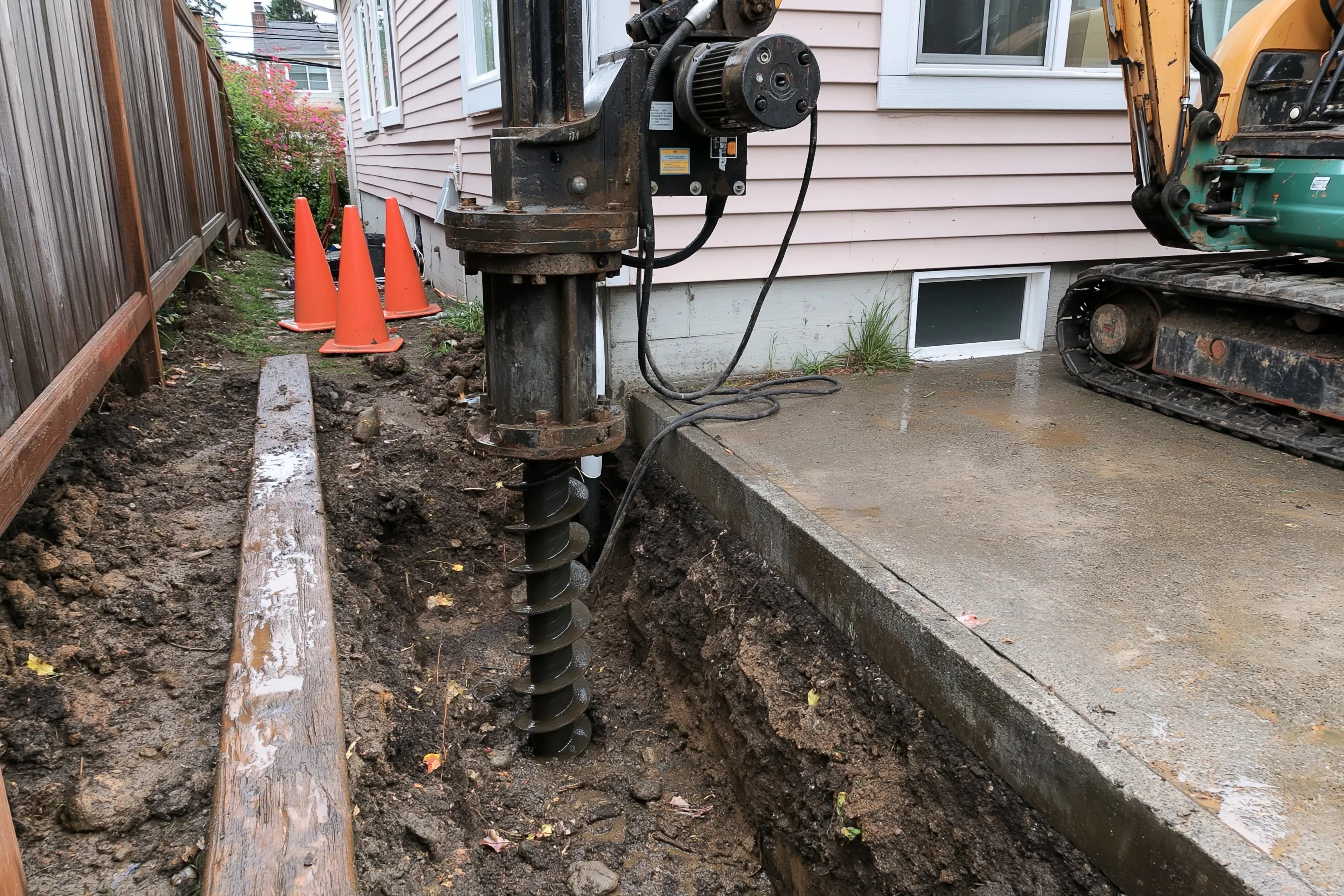
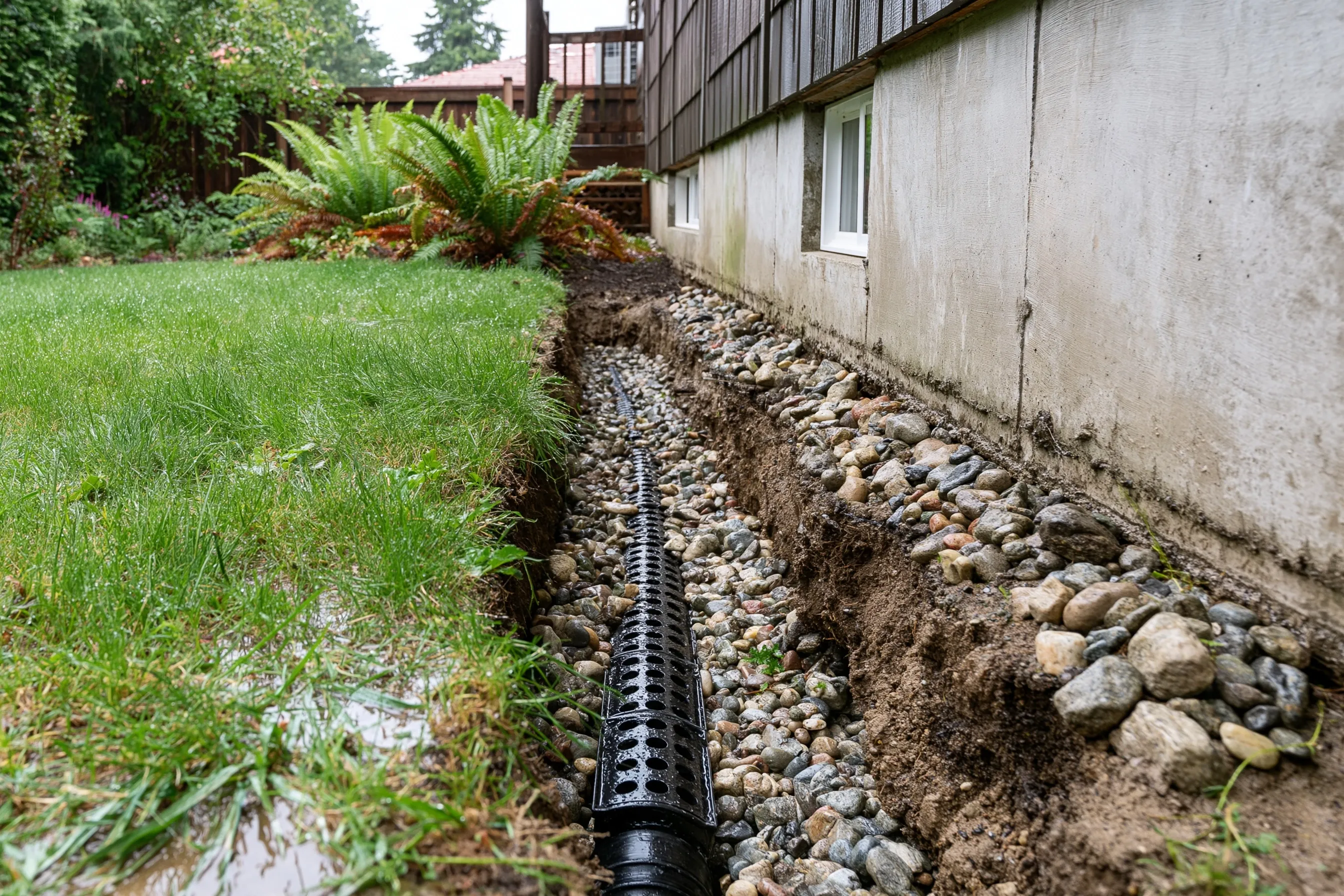
Hydraulic drive head and torque motor on a small compact excavator beside a house foundation, a steel helical shaft being turned into a narrow trench dug beside the footing, wet soil and orange conesNarrow trench along the outside of a concrete foundation wall with a perforated drain pipe laid in washed gravel at the footing level, wet lawn and sword ferns beside it

Foundation settlement and piering

A house that has dropped, tilted or pulled away at a corner may need piers driven or screwed down to firmer ground beside the footing. Push piers and helical piers work differently and each has limits, and underpinning by enlarging a footing is engineered work. We explain the choice, and we do not promise that a house will come back to level.

Foundation drainage

Water left standing at a foundation can undermine the footing and press on the wall. The remedy is a footing drain, downspouts and grade, and on a hillside lot the city may want a geotechnical report before any drain line is laid.

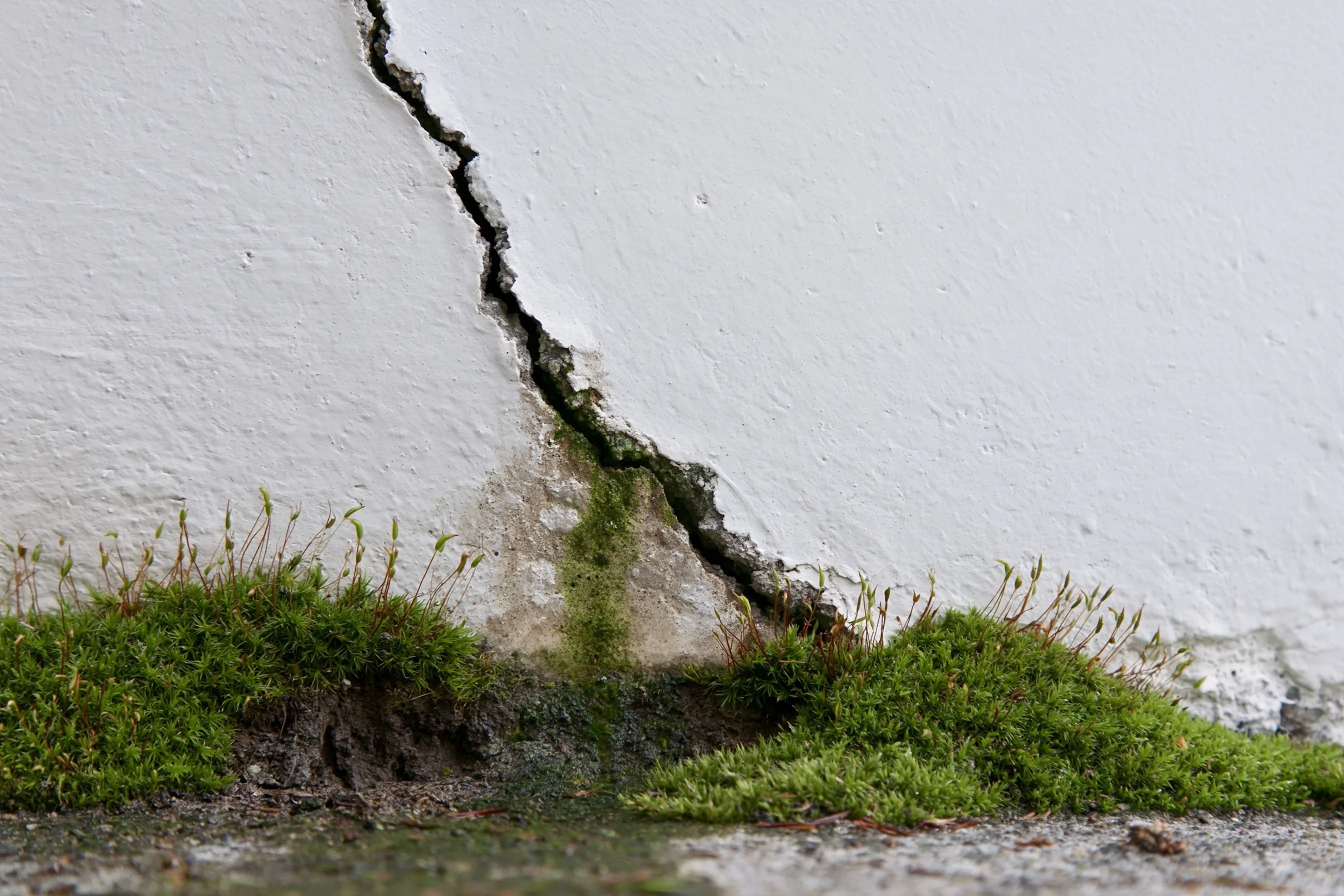
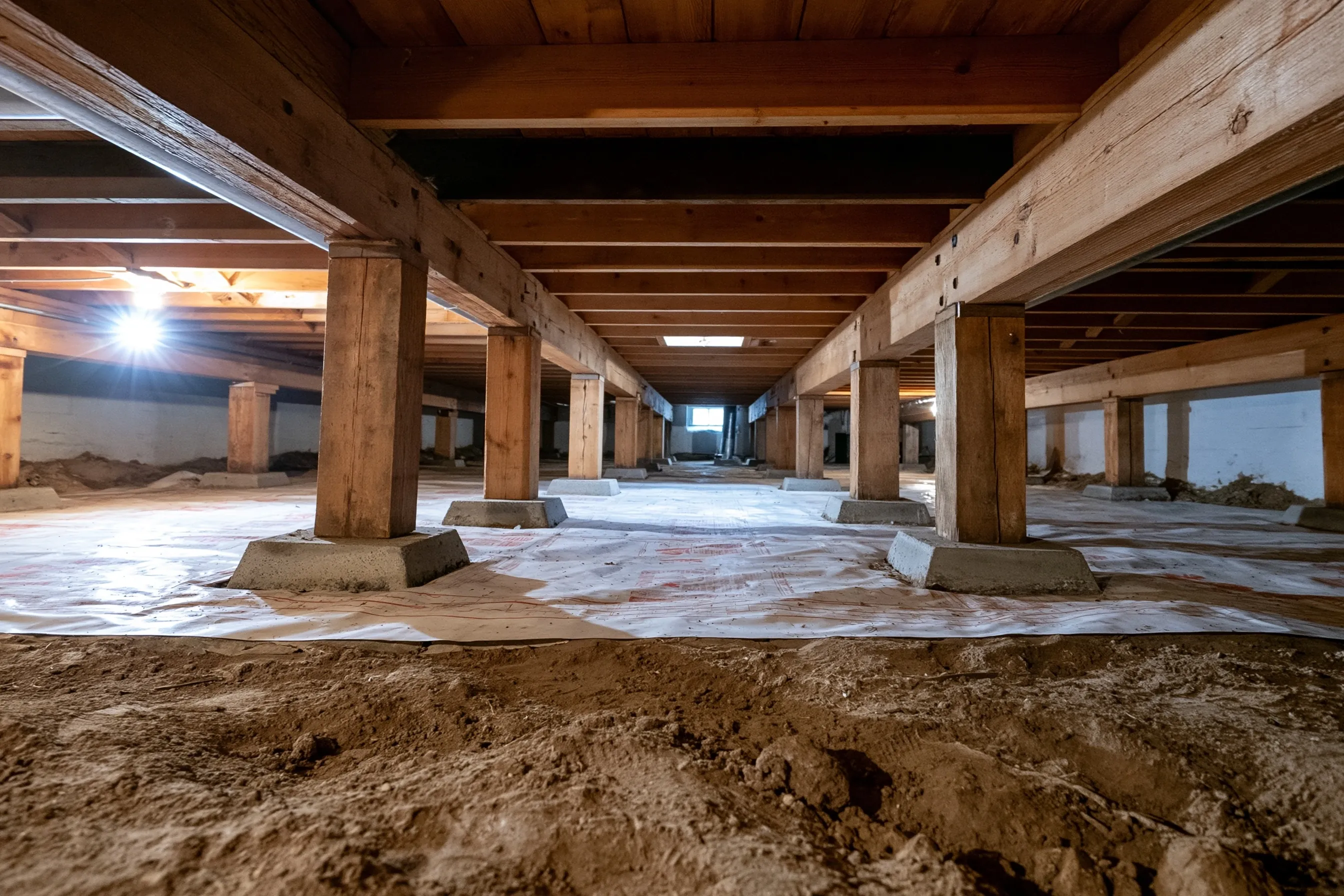
Close-up of a diagonal hairline-to-medium crack in a painted poured-concrete foundation wall, moss at the soil line and a damp stain below the crackLow view inside a crawlspace under a house: a row of timber posts on concrete pads holding wood girders and floor joists, with a vapor barrier partly covering the soil

Foundation crack repair

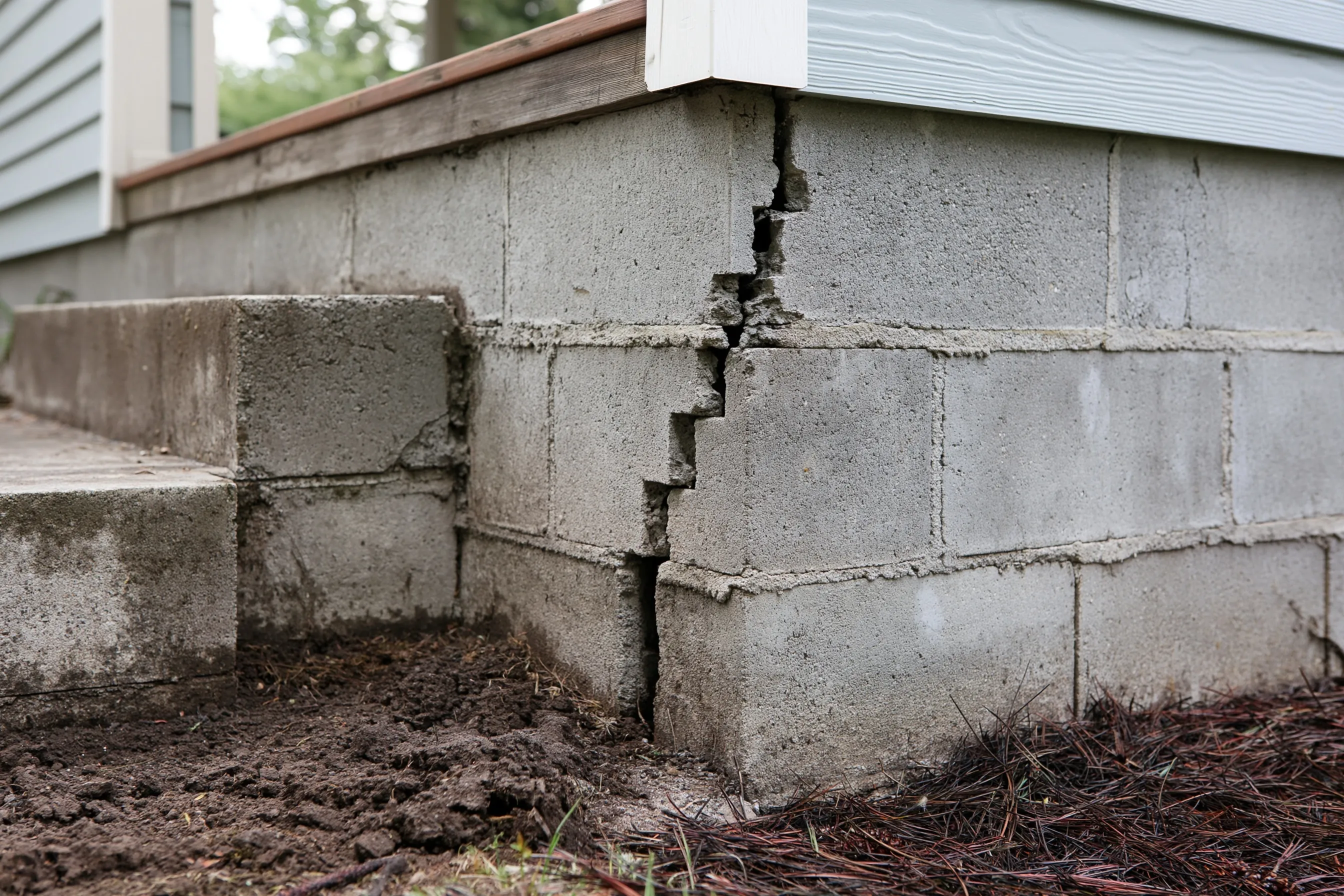
Some cracks are only shrinkage and others show that a wall is moving. The first job is working out which one you have, by its shape and by whether it changes, and only then is sealing or injecting it a reasonable step.

Crawlspace post and beam repair

Floors that sag or bounce over a crawlspace can trace to what sits underneath: posts, pads, girders, joists and the sill. We replace or add supports where they have failed, and we say plainly when damp wood points back to a water problem.

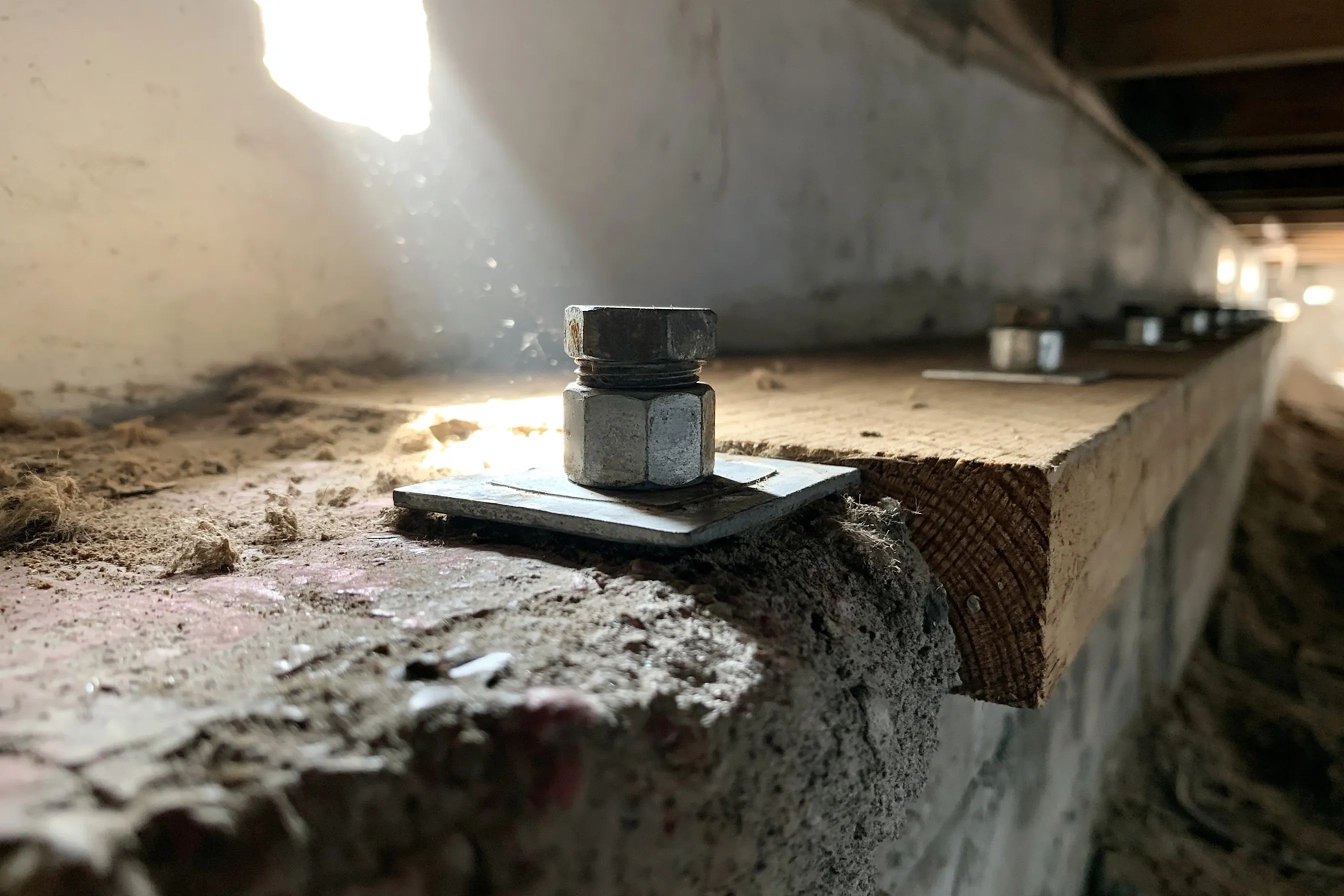
Crawlspace along a concrete stem wall: a steel anchor bolt with a square plate washer fastening the wood sill plate to the concrete, other plates at regular spacing

Seismic retrofit and foundation bolting

An older crawlspace house may have a frame that simply rests on its foundation. Bolting the sill plate and bracing the cripple walls is meant to connect the two and reduce the chance of the house sliding off. It does not make a house earthquake-proof.

Foundation repair costs

Below are 2026 estimates of hired labor and materials for foundation jobs in Renton, Kent and Tukwila. Wall lengths, pier counts and house sizes are typical ones, so each line stands for one size of job and not for your house in particular. Permit costs and any engineer’s design are left out. The low end is an easy-to-reach job, and the open top end is for tight access, deeper work or damage found once the area is opened.

Settlement and piers

  • Per pier$1,800 – $3,500+
  • One corner of the house, 3 to 4 piers$5,500 – $14,000+
  • One side of the house, 6 to 8 piers$11,000 – $28,000+
  • Whole house, 10 to 14 piers$18,000 – $49,000+
What is included

Piers go in beside or under the footing and carry it on firmer ground below. How many, how deep and which kind depends on the house and the soil, and the plan says where an engineer’s design or a permit applies.

Get a free quoteSee an example project

Foundation drainage

  • Inside drain along one wall, about 30 ft, no sump pump$1,500 – $3,800+
  • Inside drain around the whole perimeter, with a sump pump$7,000 – $18,000+
  • Outside footing drain, one side about 30 ft$3,000 – $4,000+
  • Outside footing drain, whole perimeter$12,000 – $16,000+
What is included

A drain is laid at the footing to catch water and carry it to a sump or a safe outlet, either in a trench outside or in a channel inside. Where the water gets in decides which one fits.

Get a free quoteSee an example project

Foundation crack repair

  • One crack, up to 10 feet$350 – $1,000+
  • Three to four cracks, each up to about 10 feet$1,200 – $3,500+
  • One wide or structural crack$900 – $2,500+
What is included

We measure the crack, check where water comes through and seal it from inside the wall when that fits. A wide or moving crack gets a closer look before any sealing.

Get a free quoteSee an example project

Crawlspace posts and beams

  • Replace one post$350 – $850+
  • Three to five posts$1,800 – $5,500+
  • New beam and posts under one room$3,000 – $9,000+
What is included

Posts, pads and girders that have rotted, shifted or sunk are replaced, and the floor above is supported on new footings. Moisture in the crawlspace is looked at while we are there.

Get a free quoteSee an example project

Seismic bolting and bracing

  • Bolting and bracing, house about 1,200 sq ft$4,500 – $10,500+
  • Bolting and bracing, house about 2,000 sq ft$7,500 – $17,500+
  • Bolting and bracing, house about 3,000 sq ft$11,000 – $26,000+
What is included

Bolts and plates tie the house frame to the foundation, and short crawlspace walls are covered with nailed plywood. The aim is to lower the risk of the house sliding off its foundation, not to make it earthquake-proof. A permit may apply.

Get a free quoteSee an example project

Ranges are 2026 estimates, not quotes. Your written estimate is free and comes after we have seen the foundation.

Signs your foundation needs a look

Plenty of foundation oddities turn out to be ordinary, and a single hairline crack in new concrete is not a reason to panic. These are the things worth writing down and photographing before you call anyone:

  • A crack that is wider at one end, or that runs in a stair-step through block or brick
  • A crack that has grown since you first marked it
  • Doors and windows that stick or leave a wedge-shaped gap
  • Floors that slope, or bounce when you walk across them
  • Damp, rot or soft wood in the crawlspace
  • Water that stands against the wall after rain

HUD guidance describes shrinkage cracking as rarely serious and tapering cracks as a possible sign of differential settlement. It also notes that settlement usually happens over time rather than all at once, which gives room to find the cause carefully.

Our own advice, not HUD’s: a leaning wall or an active slide is a different matter and should be looked at promptly.

When an engineer is involved

Federal HUD guidance says to call a structural or soils engineer to explain why a foundation settled, and to have the repair done by experienced contractors working under that engineer. Whether the City of Renton requires an engineer for a given repair is a question for the permit center; HUD’s advice is the sequence to follow once a foundation moves.

Washington treats two things separately. Engineering may be practiced or offered only by registered engineers, and a contractor who builds, alters or repairs buildings must be registered with the state Department of Labor and Industries. Neither of those is a building permit. You can look up any contractor’s registration yourself before you sign.

Foundation repair in Renton homes

The 2020-2024 census figures show a city that is neither old nor new. Median year built is 1988; roughly 39 percent of homes predate 1980 (about 7 percent predate 1950) and 31 percent came after 2000. About 58 percent of units are one-unit homes, detached or attached, and owner-occupied homes have a median value of $672,600.

Houses of several ages share the city, so the age of a house is one question among several. The housing figures describe the city and say nothing about any one house.

Permits and hazard areas in Renton

Ask the Renton permit center whether the repair at your address needs a building permit, and ask before work rather than after.

Renton’s critical areas code treats steep slopes, landslide, erosion and seismic hazards, and coal mine hazards as geologically hazardous areas. When a project needs a development permit and a hazard is on the lot or on a nearby lot, the code calls for geotechnical studies by licensed professionals, and for some hazards the city has the study independently reviewed. Reports are also called for near medium coal mine hazard areas. State guidance goes further: where technology cannot bring a risk down to an acceptable level, building in a hazardous area is to be avoided.

Retaining walls have their own page on the city’s site. A retaining wall 48 inches or taller, measured from the bottom of the footing to the finished grade at the top, always needs a building permit, and so does a shorter wall that supports a surcharge such as fill or another load. Residential retaining walls are limited to 72 inches, with further limits possible.

Our process

01

Look at the house

We start with what you have noticed and then look at the foundation, the crawlspace or basement and the ground around the house. Photos of cracks, gaps and damp spots help, and so does a pencil mark and a date beside a crack that is changing.

02

Find the cause

A crack, a slope in a floor and a damp wall can each have more than one cause. Water, fill, soil and old framing are all checked before a repair is proposed.

03

Plan the repair

The plan is written down: what will be done, where, and what is outside it. If the problem calls for an engineer, or a permit or geotechnical report applies at your address, that is settled at this stage.

04

Do the work

The work follows the written plan. If the soil or the framing under the floor shows something unexpected, we stop and tell you before the scope changes.

05

Clean up

We haul away spoil, debris and tools and leave the area clean. A short written note says what was done and what is worth watching afterward.

What changes the cost

Treat the listed ranges as a place to begin, since the same symptom can have very different causes. A visit comes before the written estimate, and these things move the number:

  • What is wrong, and how many places it shows up
  • How many piers, posts or feet of drain the job needs
  • How easily crews and equipment reach the work, whether a tight crawlspace or a slope
  • Soil and water conditions at the lot
  • An engineer’s report or a geotechnical study, if one applies
  • Permits and inspections
  • Finish work afterward, such as drywall or landscaping, if it is included

Service area

Beyond Renton, the work covers Kent, where houses from the 1980s and 1990s are the largest group, and Tukwila, where roughly half the housing predates 1980. Each has a page. Ask about any other nearby address.

Frequently asked questions

How much does foundation repair cost?

The listed ranges are only a place to begin. The job decides: what is wrong, how far it extends and what the lot is like. The list above shows what moves the price, and the written estimate comes once the foundation has been seen.

Is it better to fix a foundation crack from the inside or the outside?

It depends on the crack and on which side can be reached. Whether the crack is still moving matters more than the side, since a crack that keeps opening has a cause that sealing alone does not remove.

What time of year is best for foundation repair?

We do not name a season. The right time depends on what is wrong, and signs such as a leaning wall or a widening crack are better looked at sooner than at a convenient time.

Can you live in the house during foundation repair?

That depends on the work. Driving piers beside a footing, adding crawlspace posts and bolting a sill are different jobs, and we tell you in the plan what will affect the house and for how long.

Will insurance pay for foundation repair?

Insurance depends on the policy’s wording and the cause of the damage, so put the question to the insurer first. We can say what we found. Whether it is covered is a matter between you and the insurer.

Is it worth fixing a foundation?

It can be, if the cause is found and the repair fits it. A house that is stable and only shows a hairline shrinkage crack may need nothing, and we say so when that is what we see.

Do you need a permit for foundation work in Renton?

Ask the Renton permit center for your address before work starts. Retaining walls and hazard areas have written rules, summarized above.

Request a free foundation repair quote

Where is the house and roughly when was it built? Tell us what you have seen and where, and whether it is getting worse. We'll get back to you soon with an estimate or any questions we have. Estimates are free and there's no obligation.

Call (425) 276-6261

Call (425) 276-6261